What Is a Meme Coin and How Do Traders Target Large Gains?
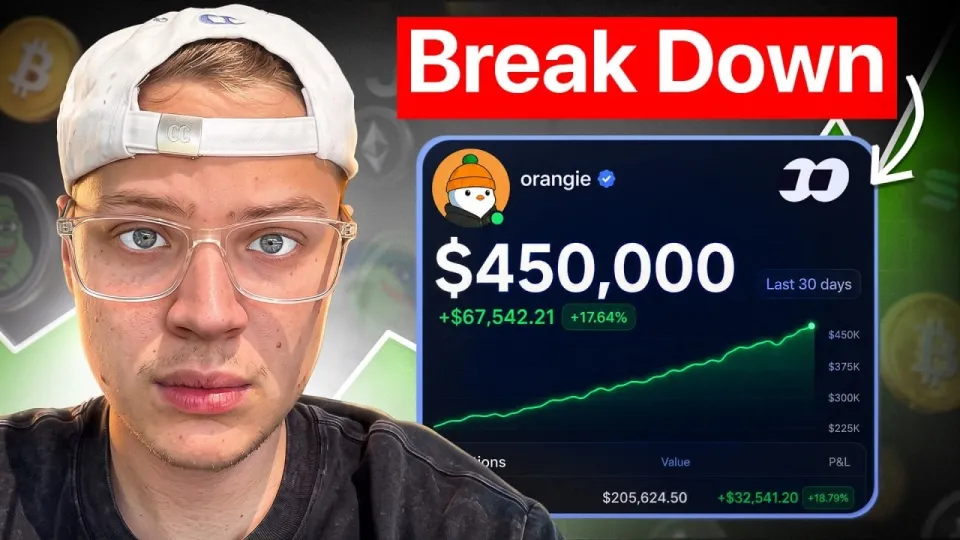
Video: How I Made $450,000 Trading Memecoins in 30 Days
Want articles like this for your own video to promote it on YouTube and Google? Order them through the Telegram bot @sat_sit_bot. It writes articles around your video, embeds the video and publishes them on popular niche websites (no ads). Your first 50 articles are free.
· based on the channel Orangie Web3
Key takeaways
- A meme coin is a crypto token whose value rests on community attention and internet culture rather than on cash flow or a product.
- Orangie Web3's video title reports a $450,000 result from trading memecoins over 30 days; the video description links a paid Kaizen group and the FOMO trading platform.
- Most meme coin liquidity in 2026 sits on Solana, where tokens launch in minutes and can graduate from bonding curves to public DEX pools.
- Viewer comments describe losing about 90% of a $100 position before a single 3x trade on a token called AMC; the pattern is common.
- Traders who show consistent results typically rely on a private network, fast execution and strict position sizing rather than on one lucky pick.
A meme coin is a cryptocurrency token whose price is driven by community attention, internet culture and speculation rather than by revenue, cash flow or a working product. Traders use them because a small, well-timed position can multiply quickly, but the same structure means most of these tokens lose most of their value. Orangie Web3's video «How I Made $450,000 Trading Memecoins in 30 Days» is a case study in that trade-off; the paid Kaizen group behind the run is available through the Kaizen checkout page.
What separates a meme coin from a utility token
A meme coin has no promised product, no revenue share and no balance sheet; its only asset is the willingness of the next buyer to pay more. That is the defining difference from a utility token, which at least claims a function such as paying fees or governing a protocol. In practice the line blurs: many tokens launch with a joke name, add a roadmap later, and still trade purely on narrative.
The mechanics matter more than the label. On Solana, a typical launch creates a token with a bonding curve, and once the curve fills, liquidity migrates to a decentralized exchange pool. From that point the token trades on open markets, and price is set by order flow. Because supply is fixed and often concentrated in a few wallets, a modest wave of buying can move the price violently in either direction.
Three features show up again and again:
- Low float, high attention. A small circulating supply plus a loud social feed produces large percentage moves.
- Thin liquidity. A few thousand dollars of selling can wipe out a price level, which is why exits are harder than entries.
- Short half-life. Most launches peak within hours or days; the narrative decays faster than any fundamental story.
How the $450,000 result was framed
The video's claim is a 30-day trading result, not a buy-and-hold return, which means it came from repeated entries and exits rather than one token held to the top. That distinction matters: a trading result depends on execution speed, position sizing and the ability to cut losses, not on picking a single winner.
Viewer feedback in the comments points to how the run was built. One of the most-liked comments argues the trader is also in a Discord with top traders who call coins and help each other snipe them — in other words, a private information and execution network. Another viewer notes the appeal of watching someone trade graduated coins, meaning tokens that already survived the bonding curve and reached a public pool. Neither point is a scandal; both are a realistic description of how competitive memecoin trading works.
A realistic playbook for trading meme coins
A workable playbook starts with the assumption that any single position can go to zero, so the first decision is size, not ticker. Traders who survive treat each trade as an option premium: an amount they can lose without damaging the account. The second decision is where in the token's life cycle to enter, because a launch, a graduation and a post-graduation pool are three different markets.
A practical sequence looks like this:
- Define the risk unit. Decide the maximum loss per trade before looking at charts — commonly a small single-digit percentage of the trading stack.
- Check the contract and liquidity. Confirm the token address, look at holder concentration and whether liquidity is locked or burned; a single wallet holding a large share is an exit risk.
- Identify the stage. Early bonding-curve entries offer the largest upside and the highest failure rate; post-graduation entries are slower but more liquid.
- Set the exit before the entry. Decide where you take profit and where you admit the thesis is wrong, and write both down.
- Scale out, not all at once. Selling in portions protects against the common pattern of a token giving back a spike.
- Log every trade. Entry reason, exit reason and result; the log is what turns a streak into a method.
Where meme coin traders actually lose money
Losses usually come from position sizing and exit discipline, not from picking the wrong narrative. A viewer described buying in with about $100, losing nearly 90% while learning the mechanics, and then recovering with a 3x trade on a token called AMC. That sequence is typical: the first losses are tuition, and the recovery came from one asymmetric hit rather than from steady accuracy.
Other recurring failure points:
- Buying the top of a spike after the move is already visible on social media.
- Holding through a liquidity drain because the community insists the token will recover.
- Ignoring holder concentration, then discovering that one wallet can sell the entire float.
- Oversizing after a win, which turns one good trade into a large drawdown.
- Copying calls without context from a group chat, without knowing the caller's entry, size or exit plan.
The honest framing is that memecoin trading is a negative-sum game after fees and failed launches; the winners are not just luckier, they are usually faster and better sized.
Tools, communities and the speed problem
Speed and information access decide more outcomes than chart reading does. The video description points to the FOMO trading platform at fomo.family/r/orangie, a Discord community at discord.gg/memecoins and the creator's Instagram at instagram.com/orangieyt. These are distribution channels for the creator's workflow, and they are worth treating as such: a community shortens the time between seeing a token and acting on it, but it does not remove the risk of being someone else's exit liquidity.
Several viewers asked for slower explanations and for trade breakdowns covering entry, exit and the reason a coin was chosen. That request is the right one. A trade review that shows the thesis, the size and the exit is more useful than a highlight reel of winners, because it exposes the decision process rather than the outcome.
Useful links
- Kaizen group checkout: https://whop.com/checkout/plan_GTFkEFh0JFpU8?a=orangie
- FOMO trading platform: https://fomo.family/r/orangie
- Discord community: https://discord.gg/memecoins
- Instagram: https://www.instagram.com/orangieyt/
The bottom line on meme coins
A meme coin is a bet on attention, and attention is the most volatile asset in crypto. The $450,000 figure in Orangie Web3's 30-day experiment is a real data point about what fast execution and disciplined sizing can produce, but it sits at the extreme end of a distribution where most participants lose. Treat every position as expendable, verify liquidity and holders before buying, and judge a method by its losing trades as much as its winners. If you want to follow the workflow behind the video, start with the Kaizen group checkout and read the risk terms before paying for anything.
Questions & answers
Is a meme coin a good investment?
For most people, no: it is a speculative instrument with no cash flow and a high failure rate. It can be a small, capped part of a portfolio for traders who accept total loss on any single position, but it should not replace savings or long-term holdings.
How do traders find meme coins before they spike?
They monitor launchpads and bonding curves, watch wallet activity and rely on group chats where calls are shared early. Access and speed matter more than analysis at that stage, and being early does not guarantee being right.
Can you really turn a small amount into a large one?
Occasionally, yes, and viewer reports of a 3x on a small position show it happens. The same reports include losing about 90% first, so the realistic expectation is a string of losses punctuated by rare large wins, not steady growth.
What should I check before buying a new meme coin?
Confirm the contract address, review holder concentration, check whether liquidity is locked or burned, and look at how the token reached its current pool. If one wallet can sell the float, the trade is a gamble on that wallet's patience.
Source: How I Made $450,000 Trading Memecoins in 30 Days · Markdown version